

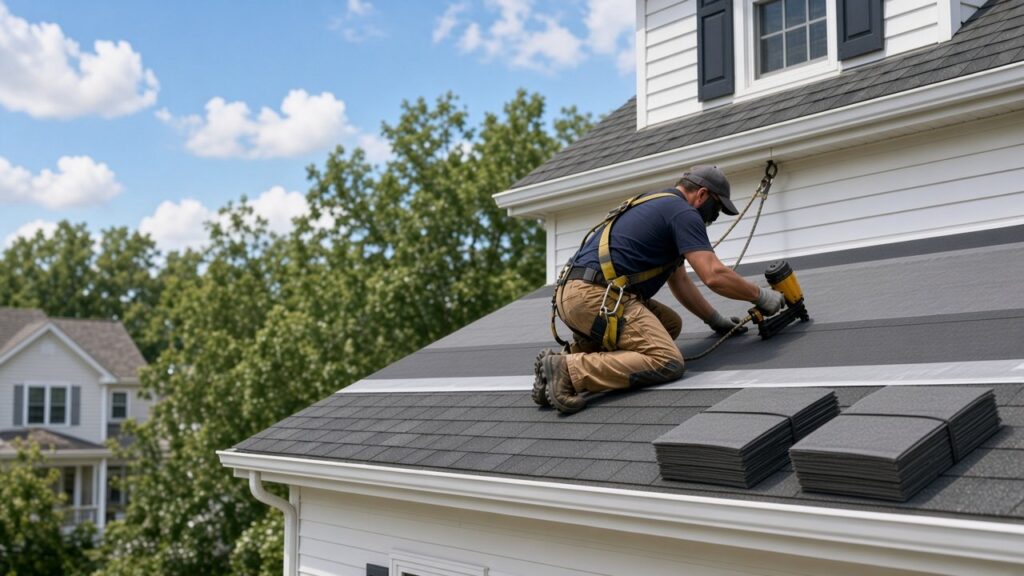
A leaking ceiling after a nor’easter is a bad time to start learning about roofing. Most New Jersey homeowners replace a roof only once or twice in the time they own a house, so it’s normal not to know what a fair estimate looks like or which questions to ask. This guide covers the basics: when a repair is enough, how to check that a contractor is registered with the state, what belongs in a written estimate, and how timing and weather affect the job here. When you’re ready to compare companies, the NJ Business Directory roofers category lists roofing contractors across the state.
Repair or replace?
Not every leak means you need a new roof. A good roofer will tell you which situation you’re in and explain why.
A repair usually makes sense when the damage is limited to one area: a few missing or lifted shingles after a windstorm, failed flashing around a chimney or skylight, a cracked pipe boot, or a small leak where the decking underneath is still solid.
A replacement is worth discussing when shingles are curling, cracking or shedding granules across large sections, when leaks keep coming back in different spots, when the decking feels soft, or when the roof already has more than one layer. Age matters too, though the right number depends on the material. Asphalt shingle, metal, slate and flat roofs in EPDM or TPO all wear differently.
Ask any contractor who recommends a full replacement to show you what they saw, in photos if they went up on the roof. Several roofers on NJBD say they start every estimate with a full inspection. Mattsson Roofing in Glen Rock, for example, says it looks at decking, flashing, ventilation and drainage before it writes an estimate. That is the kind of process you want, whoever you hire.
Check the contractor’s New Jersey registration
New Jersey has no separate state roofing license. Instead, contractors who do residential home improvement work, including roofing, must register with the NJ Division of Consumer Affairs as home improvement contractors. A registration number starts with 13VH, and you can look it up on the state’s license lookup before you sign anything.
Registered home improvement contractors also have to carry commercial general liability insurance. Ask for a certificate of insurance, and ask whether the company carries workers’ compensation for its crew. Roofing is dangerous work, and you don’t want an injury on your property to turn into your problem.
Get written estimates you can actually compare
Get at least two or three estimates for a replacement. They are only useful if they describe the same job, so look for these details in each one:
- Scope: full tear-off or an overlay, and how many layers come off
- Decking: how rotted or damaged plywood will be handled and priced if the crew finds it
- Materials: the brand and product line of the shingles or membrane, plus underlayment, ice and water shield, drip edge, flashing and ventilation
- Permits: who pulls the permit and who schedules the inspection
- Cleanup: protection for landscaping, nail sweeps and debris removal
- Warranty: the manufacturer’s material warranty and the contractor’s own workmanship warranty, in writing, with how long each lasts
- Payment schedule: the deposit and when the balance is due
New Jersey requires a written contract for home improvement work over $500, and the contract should match the estimate. Be wary of anyone who asks for most of the money up front, shows up uninvited after a storm, or pushes you to sign that day.
Permits and your town
Many roof replacements in New Jersey need a permit from your town’s construction office under the state Uniform Construction Code. The rules depend on the scope of the job and on your municipality, so ask the contractor who will pull the permit, or call the construction office yourself before work starts. A registered contractor who works in your area regularly should know the local process.
Timing and New Jersey weather
New Jersey roofs deal with heavy snow, freeze-thaw cycles, summer heat and, near the shore, wind and salt air. That affects both when you schedule work and what you ask for.
- Ice dams: In North Jersey especially, snow that melts and refreezes at the eaves can back water up under shingles. Ask about ice and water shield at the eaves and about attic ventilation and insulation, which help prevent ice dams in the first place.
- Shore homes: Homes near the coast see stronger wind and salt exposure. Ask which materials and fastening methods the contractor recommends for your location.
- Season: Late spring through early fall is the busiest stretch for roofers. Shingles seal best in mild weather, and many companies book weeks ahead. If your roof isn’t leaking yet, getting estimates in late winter or early spring can give you more choice of dates.
- Storm damage: After a big storm, take photos, cover active leaks if you safely can, and call your insurance company before you sign with a contractor.
Roofers on NJBD’s Best Of lists
NJ Business Directory publishes regional Best Of pages for roofers. Every pick is checked against the company’s own website, and sponsored listings are always labeled. A few examples of what you’ll find:
Bergen County. Our Best Roofers in Bergen County page covers contractors from Oakland to Lodi. Jim’s Roofing Repair in Bergenfield is owner-operated and has been in business since 2001, and the owner is on site for every job. Mattsson Roofing in Glen Rock serves Bergen, Passaic and Essex counties and provides a written estimate after its inspection.
Monmouth County. The Best Roofers in Monmouth County page runs from Freehold and Howell to Red Bank and Long Branch. Braga Brothers Roofing, Siding & Windows in Colts Neck says it has more than 30 years of experience and over 5,000 roofs completed. Fortified Roofing in Farmingdale offers new roofs, replacement, repair, inspections and siding, and homeowners can request an estimate online.
South Jersey. The Best Roofers in South Jersey page covers Camden, Burlington, Gloucester, Atlantic, Cape May and Cumberland counties. R.J. Severance & Sons in Audubon is a third-generation, family-owned roofing and siding contractor that has served South Jersey since 1949. Champion Exteriors in Villas, Cape May County, traces its history to 1936, when it was founded as West Wildwood Roofing, and today handles asphalt shingle, metal, TPO and EPDM roofs.
Live in or near Jersey City? Browse roofers in Jersey City, or search the full roofers category by town.
Frequently asked questions
Does a roofer need a license in New Jersey? There is no separate state roofing license, but contractors doing residential roofing must register as home improvement contractors with the NJ Division of Consumer Affairs. Ask for the registration number, which starts with 13VH, and look it up on the state’s website.
Do I need a permit to replace my roof? Often, yes. Many roof replacements need a permit from the local construction office under the Uniform Construction Code. Check with your contractor or your town before work begins.
How many estimates should I get? Two or three is a good rule for a replacement. Make sure each one lists the same scope, materials, decking allowance and warranty terms so you can compare them fairly.
Can a roof be replaced in winter? Repairs and emergency tarping happen year-round. Many full replacements are scheduled for milder weather, but some contractors work through winter on dry, above-freezing days. Ask how they handle cold-weather installs.
What should a roofing warranty cover? Look for two parts in writing: the manufacturer’s warranty on materials and the contractor’s workmanship warranty on installation. Ask how long each lasts and what voids it.
Own a roofing company in New Jersey?
Homeowners use NJ Business Directory to find local contractors they can check out before they call. You can add your company on the free Starter plan in a few minutes, or claim your existing listing and update your services and service area. To add photos and more detail, compare our plans and pricing.