

A good manicure should leave you with nice nails and nothing else. No irritation, no lifted cuticles that sting for a week, and no worry about what was on that file before it touched your hands. In New Jersey, nail salons are licensed and inspected by the State Board of Cosmetology and Hairstyling, which gives you a useful checklist before you ever sit down.
This guide walks through what a clean, well-run salon looks like, what to ask before you book, and how to compare salons near you on NJ Business Directory’s nail salon listings.
Start with the license wall
New Jersey requires every salon to post a few things where customers can see them. When you walk in, look for:
- The shop license. The salon itself has to be licensed by the State Board, not just the people working there.
- A license for every tech working that day. Each one is supposed to be signed and carry a current photo of the licensee. A wallet card doesn’t count.
- A list of services and prices. The state requires shops to post what they offer and what each service costs.
- A consumer notice. Licensed manicuring shops display a notice explaining that the shop and its operators are licensed, and that you can bring a complaint to the State Board or the New Jersey Division of Consumer Affairs.
If you can’t find these, it’s fair to ask. A salon that runs a tight ship won’t mind pointing you to them, and you can match the photo on the license to the person doing your nails.
What clean actually looks like
“It looked clean” is a start, but New Jersey’s rules give you something more specific to watch for. Here’s what the state expects behind the scenes, and what you can see from your chair.
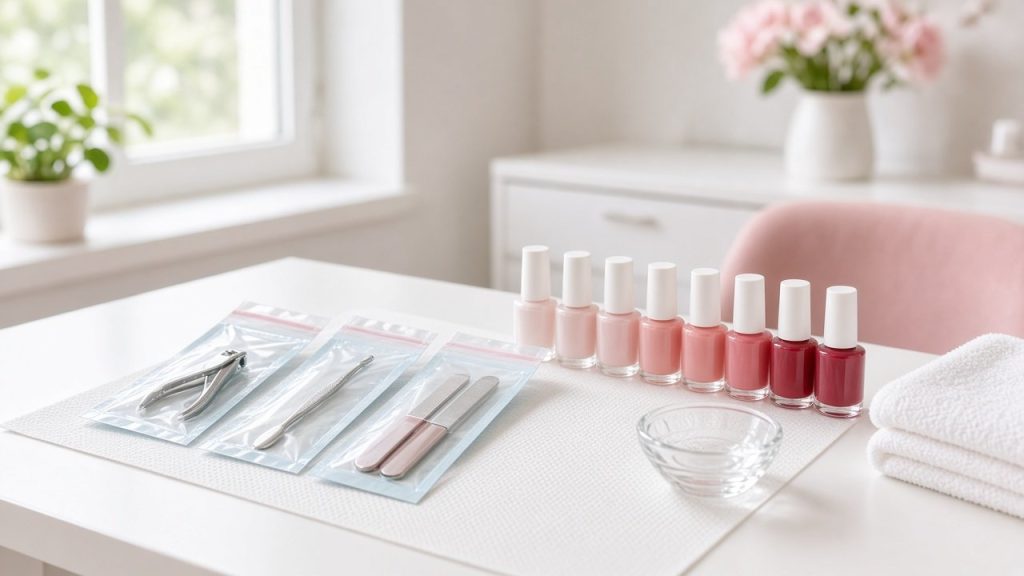
Metal tools get a real cleaning cycle. Reusable implements like clippers, pushers, and nippers are supposed to go through an enzyme pre-soak, an ultrasonic cleaner, and then an EPA-registered disinfectant labeled as tuberculocidal, or an FDA-registered autoclave. Clean tools are then stored in a closed, clean drawer or container. A good sign is seeing your tools come out of a sealed pouch or a closed drawer rather than a cup on the counter.
Some things are one and done. Emery boards, orangewood sticks, and anything else that can’t be disinfected must be thrown away after each customer. If your tech reaches for a worn file that clearly isn’t new, you can ask for a fresh one.
Pedicure tubs are cleaned between every client. The state spells out a scrub, rinse, and disinfecting step after each pedicure, plus a longer clean of screens, filters, and jets at the end of every day. You won’t see the overnight routine, but you can watch whether the tub is cleaned and wiped down before you put your feet in.
The station itself. Manicuring shops need a sink with hot and cold water, a separate area for cleaning tools, and a closed trash container at each station. Fresh towels should come from a closed container, not a stack that’s been sitting out.
None of this means you need to inspect the salon like a health officer. A couple of quick glances will tell you most of what you need to know.
Questions to ask before you book
A short phone call or message can save you from a bad appointment. A few worth asking:
- Do you take walk-ins, or should I book? Many salons do both, but weekends and the weeks before holidays fill up fast.
- How long does the service take? Gel, dip, and acrylic sets take longer than a basic polish change. Knowing the time helps you plan and keeps the tech from rushing.
- What’s included in the price? Ask whether nail art, shape changes, or removal of an old set cost extra. The posted price list is your starting point.
- How do you remove gel or acrylic? Gentle soak-off removal is easier on your natural nails than prying or heavy drilling.
- Do you use new files and buffers for each client? You already know the answer should be yes.
If you have a skin condition, an allergy to acrylics or certain polishes, or diabetes or circulation issues in your feet, mention it when you book so the salon can plan around it.
Picking the right kind of salon for you
Not every salon fits every visit. Some are quick neighborhood spots built for a polish change on your lunch break. Others focus on detailed nail art, long-wear sets, or spa-style pedicures that take an hour or more. Some share space with a hair salon, which is handy if you like to book everything at once.
Think about what you want most this time:
- Speed and convenience: a salon close to home or work, with walk-in availability.
- Long-lasting results: a salon that lists gel, dip, or acrylic services and talks about removal and aftercare.
- A relaxing visit: look for pedicure chairs, longer appointment times, and add-ons like massage or masks.
- Special occasions: for weddings and events, book a trial or a consult ahead of time.
How NJ Business Directory helps
NJ Business Directory lists nail salons across the state in one place, so you can compare options by town without bouncing between apps. Start with the statewide nail salon category, then narrow to your area.
If you’re in Hudson County, browse nail salons in Jersey City or explore everything else around Jersey City. Booking hair and nails on the same day? Our hair salon listings are a good next stop.
Each listing links to the salon’s own website and contact details, so you can check services, ask your questions, and book directly with the business.
A quick checklist for your next appointment
- The shop license and each tech’s photo license are posted.
- Services and prices are posted.
- Metal tools come from a sealed pouch or closed drawer.
- Your file and buffer are new.
- The pedicure tub is cleaned before you sit down.
- Your tech asks about allergies or sensitive skin.
If something feels off, it’s okay to stand up and leave. There are plenty of good salons in New Jersey.
Frequently asked questions
Are nail technicians licensed in New Jersey? Yes. Manicurists are licensed by the New Jersey State Board of Cosmetology and Hairstyling, and the salon itself needs a separate shop license. Both should be posted where customers can see them.
Can a salon reuse nail files? No. New Jersey requires salons to throw away emery boards, orangewood sticks, and any tool that can’t be disinfected after each use. Metal tools can be reused only after they’re properly cleaned and disinfected.
How can I tell if a pedicure tub is clean? Watch for the tub being scrubbed, rinsed, wiped dry, and sprayed with disinfectant before you use it. State rules require that between every client, plus a deeper clean of the screens and filters each day.
Where do I complain about a New Jersey nail salon? Licensed shops must post a notice explaining that complaints go to the State Board of Cosmetology and Hairstyling or the New Jersey Division of Consumer Affairs. The notice in the salon includes the contact details.
How do I find nail salons near me in NJ? Browse the nail salon category on NJ Business Directory and narrow it down by town, then contact the salon directly to book.
Own a nail salon in New Jersey?
Make sure customers can find you. Add your salon for free, or claim and upgrade your listing to add photos, your logo, and more details. See what each plan includes on our pricing page.